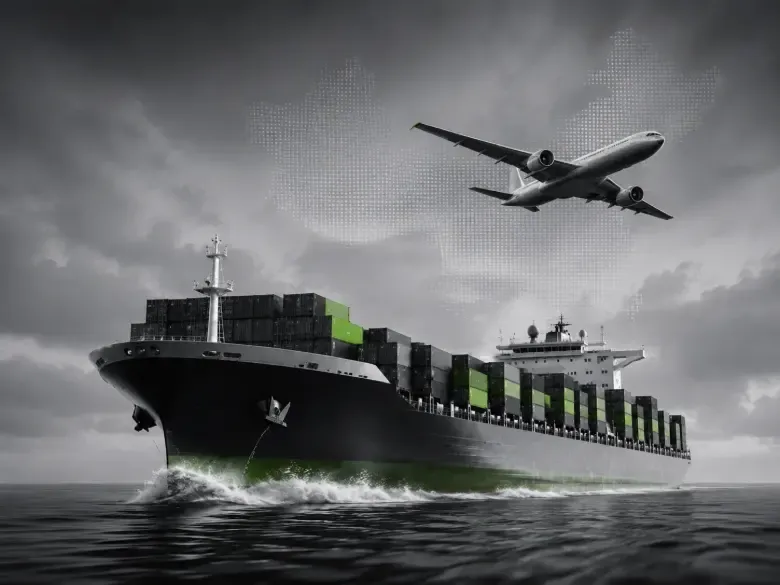
When the goods are ready to ship, the first question is not «which carrier» but «by which mode». The difference in cost can reach four or five times over, and the difference in transit time runs to weeks. Here is when it is worth waiting, and when speed is worth paying for.
Why this is a question at all
Every shipment out of China has its own logic. What makes sense for a container of furniture is economic nonsense for a pallet of smartphones, and the other way round. There is no universally «better» option — there is the option that suits a particular cargo, budget and deadline.
The commonest mistake we see in first-time clients: the sea-or-air decision is made on the price per kilogram alone, without accounting for the cost of money over time, the risk of seasonal delay, or the nature of the goods themselves.
Sea: when it pays
Ocean freight remains the main way to move large consignments, and there are concrete reasons for that.
Cost per unit of volume. From one cubic metre upwards, sea freight is consistently cheaper than air, often several times over. The gap widens with volume.
FCL and LCL — flexibility by volume. If there is enough cargo for a full container, FCL gives a fixed price regardless of how full it is. If the consignment is smaller, LCL means paying only for the space you use.
The trade-off is time. Ocean freight from China to Europe is weeks, not days, and the supply plan has to be built with that margin in it from the start.
Air: when it pays
Air freight costs more per kilogram, but the difference is often justified — not always in money, but in the thing money cannot buy: time.
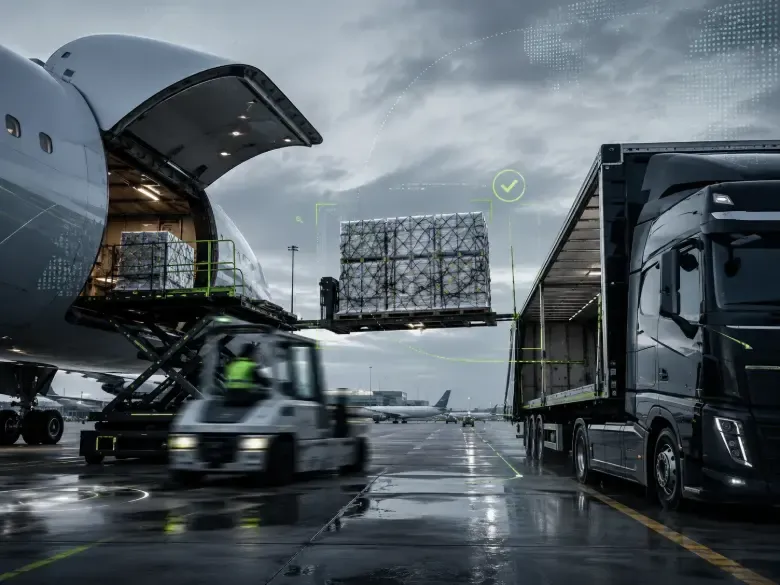
Speed. Air cuts transit from weeks to days. For seasonal goods, goods with a short selling cycle, or urgent deliveries against a contract, it is often the only workable option.
Small and medium consignments. Air needs no accumulated volume to make economic sense — even a small consignment can go without waiting «until a container fills».
Special cargo categories. Regular direct flights from Shenzhen and Shanghai let us carry Class 9 dangerous goods, lithium batteries included.
How we help you decide
We do not sell «the one right option» — we ship by sea and by air alike, so our advice does not depend on which mode is more profitable for us to sell this week. At the outset we look at weight, volume, the value of the goods and the deadline, and we cost both options side by side, so the decision is yours rather than a salesperson’s.
For regular shipments you need not choose afresh every time: guaranteed capacity on a flight, or contracted space on a vessel, takes the question off the agenda for months ahead.
| Sea | Air | |
|---|---|---|
| Cost per kg | Lower | Higher |
| Transit time | Weeks | Days |
| Minimum volume | A full container (FCL) or a consolidated consignment (LCL) | No threshold — worthwhile even for small consignments |
| DGR / lithium batteries | Limited, depending on the line | Regular flights, checked at the warehouse |
| Seasonal sensitivity | Ports can be congested at peak | Space is scarce in peak months |